

Among the most widely used carbon steel boiler tubes, ASTM A178 and ASTM A179 Boiler Tubes often appear in industrial projects. However, many engineers and buyers struggle to understand the differences between these two specifications.Although both standards serve heat transfer applications, Selecting the right boiler tubes plays a critical role in boiler efficiency, safety, and service life.they differ significantly in manufacturing methods, mechanical properties, pressure capabilities, and intended uses.
ASTM A178
ASTM A178/A178M and ASME SA178/SA178M specify electric-resistance-welded (ERW) carbon steel and carbon-manganese steel tubes designed for boiler, superheater, and heat transfer applications.The standard covers minimum wall thickness welded tubes intended for use in boiler tubes, boiler flues, superheater flues, and safe ends. These tubes offer reliable mechanical strength, excellent weld integrity, and consistent performance under elevated temperature and pressure conditions.
What Are ASTM A179 Boiler Tubes?
ASTM A179 covers seamless cold-drawn low-carbon steel tubes.
Manufacturers design these tubes specifically for:Heat exchangers,Condensers,Boiler applications,Similar heat transfer equipment
Unlike ASTM A178, ASTM A179 focuses on seamless construction and enhanced heat transfer efficiency.As a result, many industries select ASTM A179 tubes for critical thermal systems.
ASTM A178 vs A179 Boiler Tubes
| Property | ASTM A178 | ASTM A179 |
| Manufacturing Process | ERW Welded | Seamless Cold Drawn |
| Tube Type | Welded Boiler Tube | Seamless Boiler Tube |
| Material | Carbon Steel & Carbon-Manganese Steel | Low Carbon Steel |
| Standard | ASTM A178 / ASME SA178 | ASTM A179 / ASME SA179 |
| Main Application | Boilers & Superheaters | Heat Exchangers & Condensers |
| Heat Transfer Efficiency | Good | Excellent |
| Pressure Resistance | High | Higher |
| Surface Finish | Welded Surface | Smooth Seamless Surface |
| Cost | Lower | Higher |
| Maintenance | Easy | Easy |
| Dimensional Accuracy | Good | Excellent |
Manufacturing Process Comparison
ASTM A178 ERW Boiler Tubes
Manufacturers form steel strips into tubular shapes and join the edges through electric resistance welding.
Advantages include:
Lower production cost
Faster manufacturing
Consistent dimensions
Good mechanical strength
However, the welded seam remains a structural feature.
ASTM A179 Seamless Boiler Tubes
Manufacturers create seamless tubes through piercing, cold drawing, and finishing operations.
Benefits include:
No weld seam
Better pressure resistance
Improved heat transfer
Superior surface quality
Therefore, seamless tubes often perform better in demanding environments.
SA178A Pipe OD & Wall Thickness Tolerance
| Grade | Tensile Strength (MPa) | Yield Strength (MPa) |
| Grade A | 325 | 180 |
| Grade C | 415 | 255 |
| Grade D | 485 | 275 |
ASTM A179 Tubes
| Grade | Tensile Strength (MPa) | Yield Strength (MPa) |
| ASTM A179 | 325 | 180 |
Although ASTM A179 offers similar strength to A178 Grade A, its seamless structure often provides better performance under pressure.
Final Verdict
When comparing ASTM A178 vs A179 Boiler Tubes, neither specification is universally better. The correct choice depends on your operating requirements.
ASTM A178 offers an economical solution for boiler and superheater applications. Meanwhile, ASTM A179 provides superior heat transfer efficiency and seamless reliability for demanding heat exchanger and condenser systems.
For projects involving higher pressure, better thermal performance, and longer service life, ASTM A179 often becomes the preferred option. For cost-sensitive boiler installations, ASTM A178 remains an excellent choice.
This article provides a detailed comparison of ASTM A178 and A179 boiler tubes to help you choose the best option for your project. Please feel free to contact us with any questions Email : pipe@stpipefitting.cn.
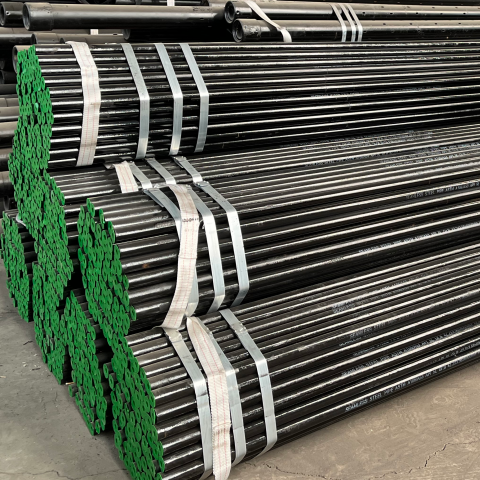 Cold Rolled Seamless Steel Pipe
 What Is The Difference Between Stainless Steel 304 VS 201?
 Mechanical Tube Size Chart
 ASTM A106 Seamless carbon steel pipe

